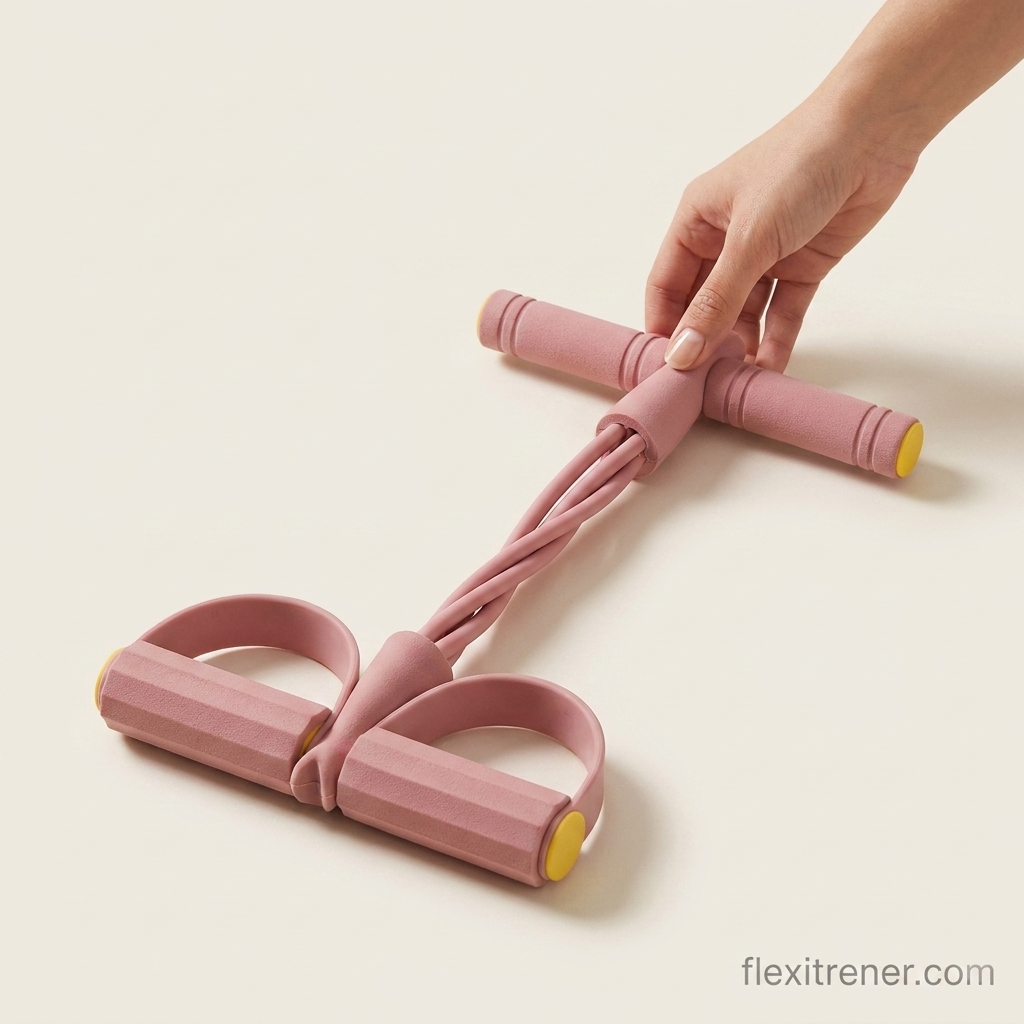
The “sagging belly” wouldn't go away - until I realized it wasn't fat (and that I had been exercising completely wrong)
Summary: My stomach was flat when I lay down, but bulged out as soon as I stood up. For years, I thought it was fat - and exercised even harder. Here I explain what was really going on beneath the abdominal wall, and which single movement finally gave me my stomach back, in ten minutes a day on my living-room floor.

“I had given up hope that my stomach would ever be flat again.”
1“Are you pregnant again?” - the question that made the cup overflow
It was on an ordinary Tuesday, while I was waiting in line at the store, that an acquaintance placed her hand on my arm, smiled warmly, and asked: “How lovely - are you pregnant again?” I wasn't pregnant. My youngest was three and a half years old. And I remember laughing it off, paying, and sitting in the car before the tears came.
What hurt was not the question itself. It was realizing that I knew exactly what she saw. Because I saw the same thing myself every morning in the mirror: When I lay down, my stomach was flat. But as soon as I stood up, my lower abdomen shot forward. Sitting down, with my shoulders slightly hunched, I looked like I was five months pregnant again.
 See what finally worked for me →
And let me be honest: I had really tried. Pilates for a year and a half. Ab exercises in the morning. Two diets I didn't really want to talk about. One summer of jogging three times a week. Yet my stomach looked almost the same as it had six weeks after giving birth. I came to the conclusion that most women eventually reach: that this was simply what my body was like now.
What I didn't know was that I had been working against my stomach - not with it.
2It wasn't fat. And it wasn't my fault.
The turning point came when I was sitting with a physiotherapist for an entirely different issue - a painful shoulder. She looked at me, asked me to stand up, and said something I will never forget: “What you see there is not fat. And it has nothing to do with not exercising enough.”

She explained it like this: Over the years, and especially after a pregnancy, the pelvis slowly tilts forward. It is a completely natural process - the baby's weight over nine months, loosening of the ligaments, spending a lot of time lying on your stomach while breastfeeding. But when the pelvis remains in this forward tilt, the organs sink downward and push the lower abdomen forward.
When she gently pressed on my stomach, I could feel it yield softly. “It’s not a layer of fat,” she said. “It’s the deep support that has lost its grip.” For the first time in three years, my symptoms made sense. Flat when I lay down. Bulging outward when I stood. Exactly as she had described it.
3Why sit-ups made it worse - and what actually holds the stomach in
The abdominal muscles we all know are the superficial layer - the rectus abdominis and the obliques. They are what shape a “six-pack.” But they do not hold the stomach in place when you stand. That is the deep layer: transversus abdominis, an internal corset muscle that runs transversely around the core, together with the pelvic floor.
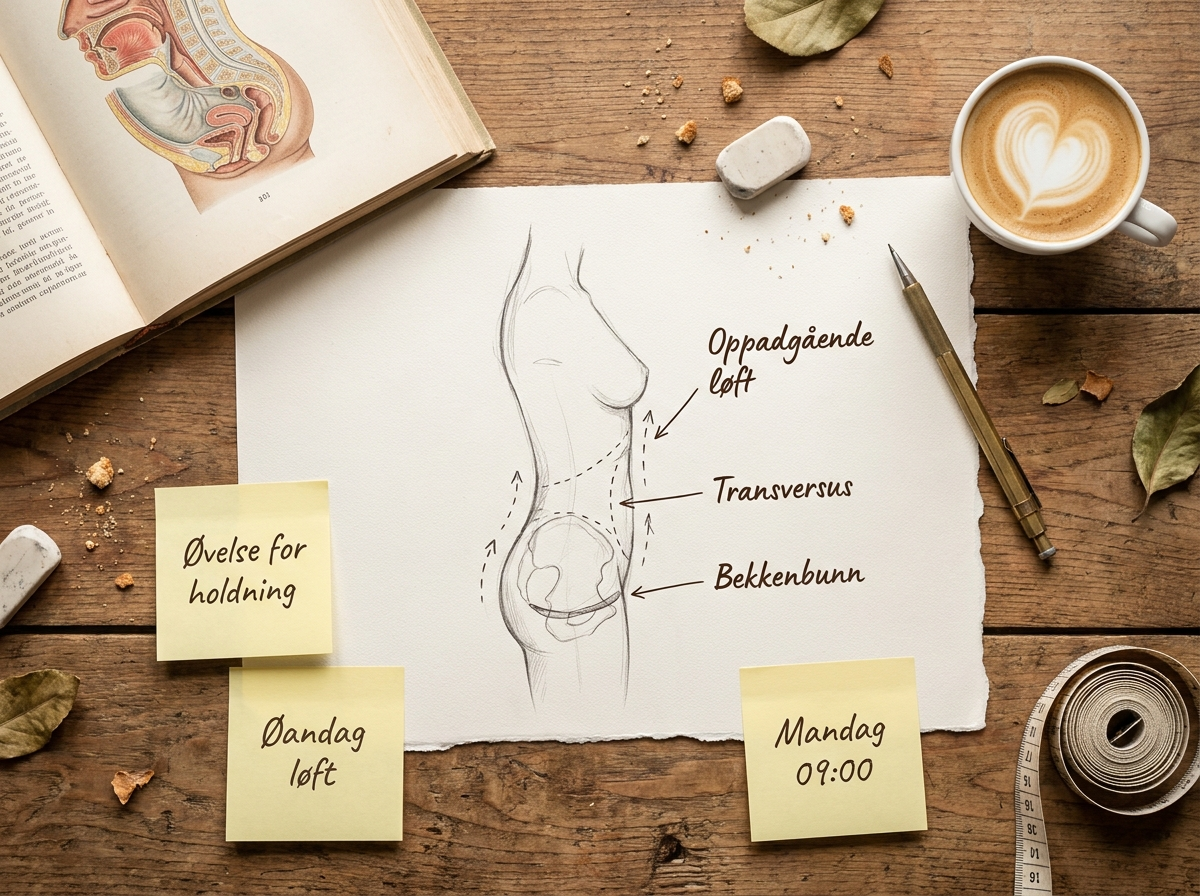
During pregnancy, the transversus is stretched to several times its original length. For very many people, it never automatically contracts again. Then the core lacks the internal corset that holds it in - no matter how many sit-ups you do.
“And here’s the problem,” the physiotherapist explained. “Sit-ups and crunches increase pressure forward and downward - exactly the direction we want to relieve. Jogging delivers a downward impact with every step, which stretches the pelvic floor even further. You can train incredibly hard and still make things worse.” That explained why three years of effort had not moved it even a centimeter.
The deep layer responds to a completely different type of stimulus: slow, controlled tension against light resistance. Not short, forceful movements. Calm, steady, from within.
The job usually isn't to give women more exercises. It's to get them to stop doing what keeps the stomach down - and start training the layer that lifts it up.
4The turning point: ten minutes on the living-room floor with a pink pedal band
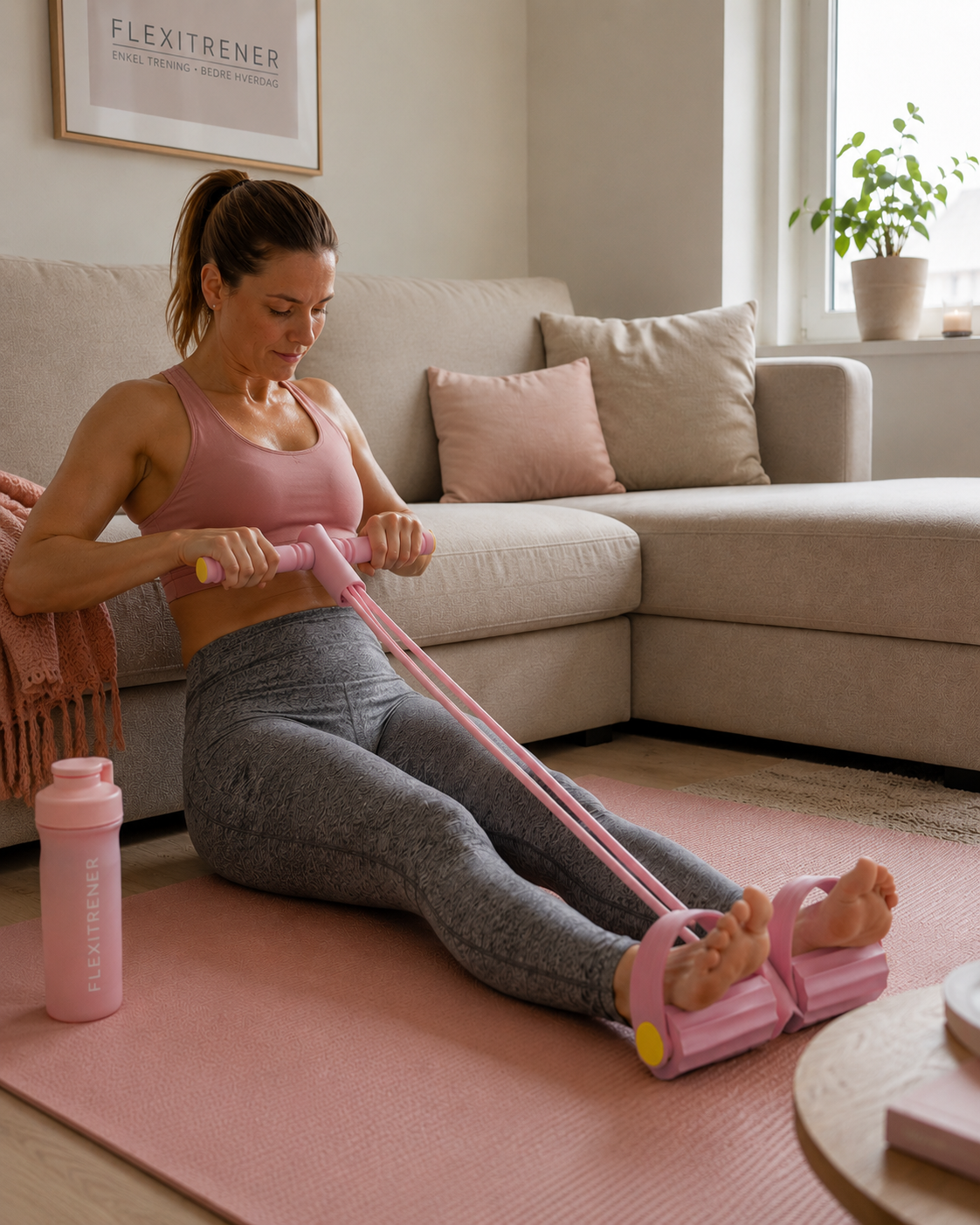
The physiotherapist recommended a simple exercise against light resistance - an “upward lifting movement” in which the pelvis is gently straightened and the deep muscles learn to hold the core in place again. For that, I needed neither a studio, a trainer, nor expensive equipment. Just a pedal resistance band and some floor space.
 Try Flexitrener risk-free for 30 days →
The movement is simple: Sit on the floor with your legs straight, place the straps around your feet, and take the handles in both hands. Lean slowly backward to about 45 degrees. Then pull the handles in a controlled manner toward your chest as you exhale - while actively drawing your stomach inward, as if fastening a far-too-tight trouser button. Hold for two seconds. Return slowly. 25 repetitions.
The first time I did it correctly, I felt it immediately. Not a burning sensation like after fifty sit-ups, but a deep warmth low in my stomach - almost as if something were lifting from within. “That is exactly the feeling you are looking for,” she had said. Ten minutes later, I was finished.
5Week by week: how it changed

I’ll be honest: nothing visibly happened during the first week. But something else did - the barrier to getting started was finally low enough. Ten minutes on the floor in front of the TV required no planning, no travel, no motivational speech to myself. I exercised more times during that first week than I had the entire month before.
In week three, I wrote in the notes on my phone: “For the first time, no protruding stomach when I stood up from the sofa.” In week six, a pair of trousers that had been lying at the back of the closet for more than two years fit me - without my having been on a single diet. And sometime around week ten, I was standing at the playground, and no one asked anything at all.
What changed was not just my stomach. It was my posture. My trousers. The way I looked at myself in the mirror in the morning.
The strain is gentle on the joints and back - no impact, no jumping, no pressure on the pelvic floor. Three times a week is enough for most people. Many see the first visible changes after four to six weeks. For some, it happens faster; for others, it takes a little longer. It depends on your starting point and how consistently you exercise.
6Why it was specifically Flexitrener
There are several pedal bands out there. The reason I - and eventually my physiotherapist - settled on Flexitrener comes down to the details that determine whether you actually keep going.
First: The band has six tensioned tubes instead of just two or three, so the resistance is even and stable throughout the entire movement. Second: The foot pedals are shaped so your feet do not slip out - important when you sit for a while. Third: The handles are ergonomic with soft foam padding, and do not press into your palms even after 25 repetitions.
“It sounds like small things,” said the physiotherapist. “But if the equipment is uncomfortable, people stop after two weeks. Comfort determines whether you exercise three times a week - or not at all.” And that was true for me.
Flexitrener is delivered in Norway with free shipping and a 30-day satisfaction guarantee. If you use it consistently for four to six weeks without noticing any change, you can send it back. For me, that was exactly what made it easy to start: If it didn’t work, I had nothing to lose. If it worked — and it did — I would have gotten my stomach back.